Discover how to transform prospects into loyal customers with the Leads to Loyalty CRM growth framework. Learn proven strategies to boost retention, conversions, and long-term business growth.
Table of Contents
Introduction
In today’s competitive business landscape, acquiring leads is only half the battle. The real success lies in turning those leads into loyal, long-term customers.
That’s where the Leads to Loyalty framework powered by CRM (Customer Relationship Management) systems becomes essential.
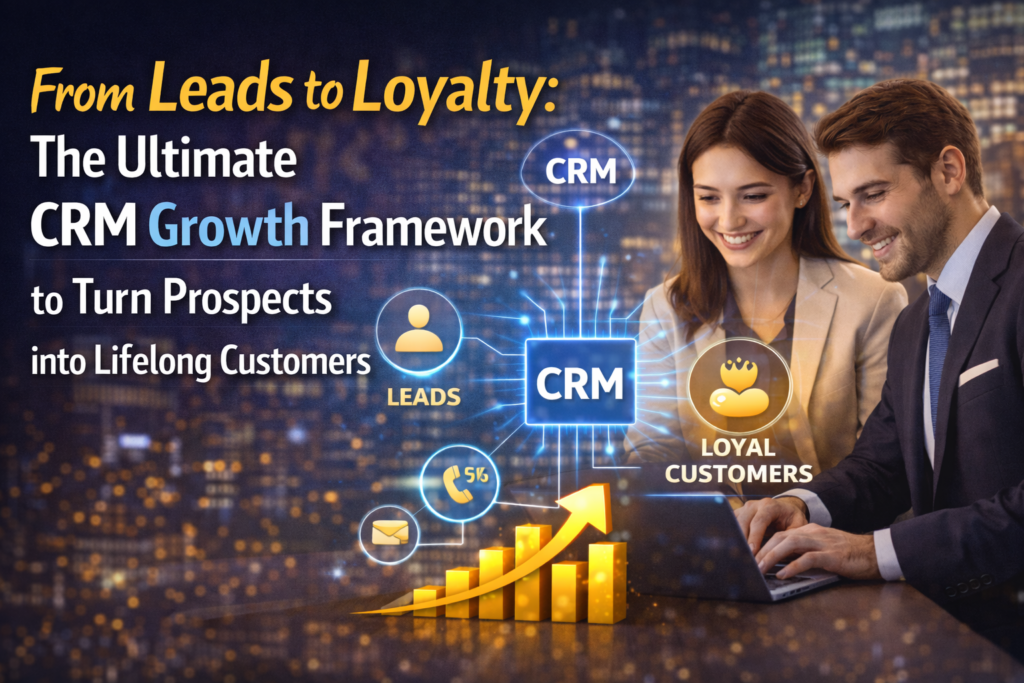
Modern businesses are no longer focused only on conversions—they aim to build lasting relationships. A well-structured CRM growth framework helps companies guide customers through every stage of their journey, from first interaction to brand advocacy.
In this blog, we’ll break down the Leads to Loyalty framework, its stages, strategies, and how CRM enables sustainable business growth globally.
What is the Leads to Loyalty Framework?
The Leads to Loyalty framework is a structured approach that focuses on transforming potential customers into loyal advocates.
Key Stages:
- Lead Generation
- Lead Nurturing
- Conversion
- Customer Engagement
- Retention
- Loyalty & Advocacy
Each stage plays a critical role in building long-term customer relationships.
To understand CRM fundamentals, explore this guide:
👉 https://www.salesforce.com/in/crm/what-is-crm/
Why CRM is the Backbone of Leads to Loyalty
CRM systems act as the central hub for managing customer relationships.
CRM Enables:
- Centralized customer data
- Personalized communication
- Automation of workflows
- Real-time analytics
- Customer journey tracking
According to Gartner, businesses that prioritize customer experience outperform competitors significantly:
👉 https://www.gartner.com/en/insights/customer-experience
Stage 1: Lead Generation – Attract the Right Audience
The journey begins with attracting potential customers.
Strategies:
- Content marketing (blogs, videos)
- Social media campaigns
- Paid advertising
- SEO optimization
CRM Role:
Capture and store leads from multiple channels in one place.
Stage 2: Lead Nurturing – Build Trust and Interest
Not all leads are ready to buy immediately.
Effective Tactics:
- Email drip campaigns
- Educational content
- Webinars and case studies
CRM Advantage:
Automate nurturing workflows and track engagement.
Learn more about lead nurturing:
👉 https://blog.hubspot.com/marketing/lead-nurturing
Stage 3: Conversion – Turning Leads into Customers
This is where prospects become paying customers.
Key Techniques:
- Personalized offers
- Sales follow-ups
- Product demos
CRM Helps By:
- Tracking lead behavior
- Prioritizing high-intent prospects
- Automating sales processes
Stage 4: Customer Engagement – Deliver Value
After conversion, engagement becomes crucial.
Engagement Methods:
- Onboarding emails
- Product tutorials
- Customer support
Goal: Ensure customers get maximum value from your product/service.
Stage 5: Retention – Keep Customers Coming Back
Customer retention is more cost-effective than acquisition.
Strategies:
- Loyalty programs
- Personalized recommendations
- Regular follow-ups
CRM Role:
Track customer behavior and trigger re-engagement campaigns.
Stage 6: Loyalty & Advocacy – Turn Customers into Promoters
Loyal customers don’t just buy—they promote your brand.
Ways to Build Loyalty:
- Referral programs
- Exclusive offers
- Community building
Outcome:
Word-of-mouth marketing and organic growth.
CRM Growth Framework in Action
Here’s how CRM connects all stages:
| Stage | CRM Function | Outcome |
|---|---|---|
| Lead Generation | Data capture | Organized leads |
| Nurturing | Automation | Engaged prospects |
| Conversion | Lead scoring | Higher sales |
| Engagement | Personalization | Better experience |
| Retention | Analytics | Repeat customers |
| Loyalty | Campaigns | Brand advocates |
Key Strategies to Strengthen the Leads to Loyalty Framework
1. Personalization at Scale
Use CRM data to tailor communication for each customer.
2. Omnichannel Communication
Engage customers across email, social media, and messaging platforms.
3. Data-Driven Decision Making
Analyze CRM data to improve strategies continuously.
4. Automation for Efficiency
Automate repetitive tasks to save time and improve consistency.
5. Customer Feedback Integration
Collect feedback and refine your approach.
Common Mistakes to Avoid
- Focusing only on lead generation
- Ignoring post-purchase engagement
- Lack of personalization
- Poor CRM data management
- Not aligning sales and marketing teams
Future Trends in Leads to Loyalty
🔮 Emerging Trends:
- AI-driven customer insights
- Hyper-personalization
- Predictive analytics
- Integration with Web3 and digital identity
Businesses that embrace these trends will build stronger, long-lasting customer relationships.
Real-World Impact
Companies using CRM-driven strategies see:
- Higher customer lifetime value (CLV)
- Improved retention rates
- Stronger brand loyalty
For insights on customer retention strategies:
👉 https://www.forbes.com/sites/forbesbusinessdevelopmentcouncil/2023/02/14/customer-retention-strategies/
Conclusion
The Leads to Loyalty framework is not just a strategy—it’s a mindset shift. Instead of focusing solely on acquiring customers, businesses must nurture relationships and deliver continuous value.
CRM systems make this possible by providing the tools, data, and automation needed to guide customers through every stage of their journey.
Final Takeaway
If you want sustainable global growth, focus on building relationships—not just closing deals. By implementing the Leads to Loyalty CRM framework, you can turn prospects into loyal customers and loyal customers into brand advocates.
Discover how CRM Email Automation boosts conversions with proven strategies, smart workflows, and personalization techniques to grow your business globally.
